

Jerome Berglund Interview
Welcome to the 18th Wolf Twin Review!
Introducing our Summer featured poet Jerome Berglund: a haikai poet, photographer, night watchman, and assembler of heart valves.

not your tree
despite best attempts
to stake a claim
dangerous winds
cutting the cake with
a wire slicer
off for
a pack of cigarettes
snake skin
all these books
I've started
trailing inch plant
Jerome Berglund Interview:
1. What inspires you the most?
Personally, as I'm sure is true for every creator our motivation evolves over time. I'm from the last generation whose imperfect understanding of pathologies and use of old-world lingo has shaped our thoughts and how we approach things.
As someone with neurodivergent tendencies, my ways might be considered flawed, deviant, or at best quirky and eccentric. Consistently, communication has been a struggle, and I’ve always found art to be an enchanting means to explain, connect, and engage with others I care about as well as the public at large.
Being a very concerned humanitarian, utilizing artistic tools to promote the betterment of our planet and species has also been a core concern. It’s why I gravitate towards micropoetry and the Japanese inspired short forms. Brevity is key; it’s the slogan and sound bite of the hectic pace of our current times, and it sates our cultivated short attention spans.
These days, I'm interested in organizing, agitating, raising awareness, and educating. I enjoy reevaluating our assumptions about heroes across time, and other modern assumptions regarding science and history, and our trust in encyclopedias and the media. I’m also intrigued and inspired by bringing fallacies to light, uncovering misconceptions and myths both regarding society and how we construct our little niche of English Language Haiku. In my modest poetic career, researching, presenting information, exploring, teaching, and encouraging experimentation or creative collaboration bring me the most joy.
2. How do you strike that vital balance in your haiga to ensure the image adds to the haiku instead of distracting from it?
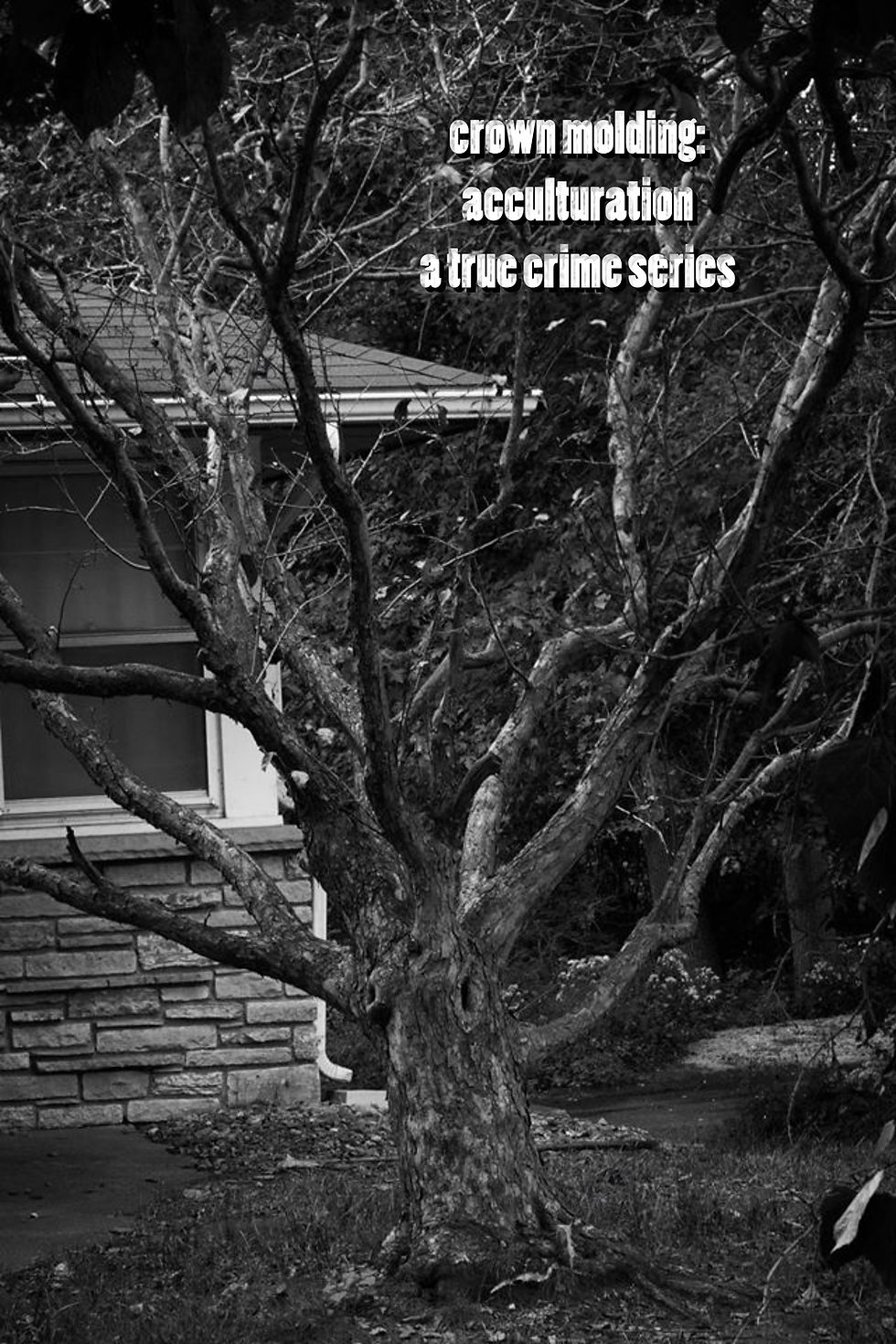
Such a fantastic question. There's a thousand ways to hybridize, and ten times that for writing haiku. So please take anything I say as one opinion and perspective. A lot of people, often with good intentions, will tell you they know what a haiku isn't, what a senryu is, and will offer a paint by numbers formula to construct a tanka. At this point in writing and submitting, I've departed from the authoritative, prescriptive schools. Most readily available rules are from those with the largest platforms, most visibly, and are more about opinion than the knowledge of basic and core tenets. Despite this, I’ve found the vast majority are caring and knowledgeable. Credible scholars will tell you, and I agree that the cardinal sin in making a shahai is redundancy: not introducing new information between the verse and the image.
You can improve your ability to link and shift, to introduce or harmonize toriawase—on each side of the cut—between sequences, or other approaches (including haiga or haibun) by studying the renga tradition of linked forms.
For those new to the approach, tan renga and collaborative tanka is an awesome place to start; after which, rengay is tremendous fun. But attempting the thrilling kasen, or other aesthetics (with its shifting seasonality, or the incorporation of precise dictates and rhythms) are enormously beneficial to all forms of haikai poetry and arts.
Specifically, the concept of close and distant (shinku and soku) linkage holds the answer to this question. As a film graduate, I’m inclined towards the Eisenstein montage. Others prefer more immediate and obvious connection between the poem and the picture.
There are many conflicting perspectives, and the same question always looms over haibun and the gunsaku string. In a rensaku sequence, there's a linear narrative taking place—like with standalone stanzas—they’re directly or indirectly connected by theme. Also with haiga, and interspersed verses throughout a haibun’s prose. We should ask: Must they inhabit the same space and time? Are they a literal part of the same scene?
If I remember correctly, I read one of the many riveting essays on Bashō's meiku, and a Japanese scholar argued that even within his most famous pond poem there was an alternation between the shasei and the memory or imagination. A lot of Bashō’s travelogues were written about encounters that indirectly related to the prose, which created a figurative connection through symbolism and subtext.
Just as linking in group poetry requires a relationship between text and the accompaniments, practitioners must be aware of getting too close. The goal then becomes that classic Goldilocks or Aristotle seeking the perfect mean within that liminal space.
Another aspect of kasen worth mentioning is the balance between ground and pattern, or ji and mon. Essentially, one will be more successful if harmony and symmetry along with highs and lows, fast and slow (on the literary rollercoaster), are present in the structure.
In a haiga, this is best incorporated by allowing either the image or the poem to ride shotgun. It’s helpful to set one as the primary and the other as the supporting role. This is a wonderful way to create partnerships between unpaired verses and photos you wouldn’t publish alone.
I also suggest:
• Hang onto pieces that keep coming back. They can function spectacularly in tan renga or as renku stanza.
• Avoid flashy pattern pieces with your kasen in haiku—they tend to be disastrous.
• Create an arsenal of phrases.
• Separate sentence fragments for various uses: salvaging, extracting from, and repurposing works in progress. You can often find a more suitable purpose for something you value and enjoy!
3. Do you enjoy the challenge of creating juxtaposition between the prose and haiku in haibun?
I love it myself, though I know it can prove somewhat baffling or frustrating for some. At first, I felt that way for a long while. What proved liberating was immersing myself in surrealism, and the dada and symbolist schools of French poetry which share commonalities with our modern gendai and postku approaches that you can observe gloriously displayed at Five Fleas, dadakuku, circle of salt, Heliosparrow, and the Other Bunny.
When I closely linked the text, it felt incorrect to me—the way describing a photo seems not optimal or redundant in a shahai. But once one gains comfort, introducing a larger gap, it's exhilarating to find verses and fruitfully pair with a story or introduce additional layers of complexity to it.
Afterward, one can even pull off a real conceit: the other day Michele Harvey shared a brilliant piece, and capped the text in a tercet which completely challenged, disagreed, and conflicted with it! Now that's juxtaposition! By accomplishing a similar outcome in haibun and photo-haiku, we can create much more interest, tension, and charge there.
4. Your work has been published in many prestigious haikai journals. What advice do you have for burgeoning writers about submitting?
Okay, hear me out on this one, because it equally applies to publishing houses, selling screenplays, any commercial peddler of validation and prestige. In my personal experience, mayhap you can enter some of those accessible spaces, but the majority of top tier markets, in larger creative landscapes and haiku, are not particularly open to people outside of a very narrow, specific demographic. As a result, haiku poets tend to cease practicing approximately five years in, at most. I'm currently volunteering with the Haiku Foundation to aid efforts in attracting new or young voices and to retain active writers, as this issue has been documented too often.
My advice is not to focus on journals you don’t vibe with. 85% of haikai is just terrific; the editors and colleagues are consistent delights. There are seriously no shortage of awesome journals and haikai publishers out there who appreciate the privilege and honor, and are overjoyed to read your work. Many appreciate the value and time it takes to submit, and they try to make the process easy and respectful.
Follow me on Instagram or hit me up if you need some ideas. I could recommend thirty publishers off the top of my head. If you put in the time and submit to as many as you can, you’ll have a real chance. Acceptance is worth the time you put in.
For starters, I don’t bother with Submittable. The chances there are almost non-existent. Make some friends, see where they're publishing. See if those publishers match well with your work.
I’ve agonized over what I sent wrong, could send better; what I'm doing wrong or right on social media, and in cover letters. I've gotten into places after trying for years, which is really fulfilling and validating. But, I’ll also say, the ones I kept submitting to for years and years, without progress, very few times did that have a happy ending. Basic stuff to keep in mind:
• Avoid any market that charges to submit.
• Follow the submission guidelines.
• Get organized.
I keep all my submissions in a document, and I move stuff into and out of it. I keep tabs on when pieces are released, and make note if a publisher doesn’t send written responses.
• Do research and get to know the publishers before you submit.
As a rule, if you have not submitted somewhere before, make a note, and watch for their next release or dormancy.
Simultaneous submissions are incredibly complicated to keep track of, and ripe for awkward things going wrong. But if you go down that route, tracking sites or organizational software like an Excel spreadsheet are a must.
There are plenty of rad publishers out there waiting to read your work. So, my advice: Stick with the publishers you enjoy reading, and try your best not to waste time or energy on the ones you don’t.
5. Can you describe your preferred writing environment?
It's funny, one out of comfort can crave the vacuum, but without stimuli so little inspiration is to be found! Often, there’s some degree of ekphrasis with finding shasei whether in media, art, or literature is ideal. Unfortunately, the most conducive environments, say a reflective bath, hurriedly walking a pooch, or in the middle of an engaging jaunt, one never has a pen on hand or the ability to swiftly key into the smartphone even. Damnably ironic or paradoxical!
6. Do you shy away from or try to incorporate your favorite words, images, or themes in your work?
Oh, that’s a tough one. I’ve published so gosh darn many micropoems, over the years, I can’t escape reusing common language and favorite seasonal words occasionally. But again, I do my very best to avoid over repeating the ten-dollar ones, or too similar phrasings. I don’t know how our forefathers managed without the find function? It must have been excruciating for secretaries, or perhaps they just shrugged? But one finds oneself more mindful and always aware, like those eavesdropping exercises we were assigned in screenwriting courses—words and verbiage wash over us, every waking moment of our lives. I find reading classics that match my mood or sensibilities, can be helpful for building vocabulary, discovering, and dusting off terminology, or to augment and title a poem or story! As Stephen King, or perhaps a crack team of ghostwriters famously opined, writers must read a lot.
7. What aspect of photography has made you a better writer?
It’s so logical that short form poets seeking the haiku moment, and fine art nature photographers or birders have so much overlap and parallels. We’re all doing the same thing. The more attuned one becomes, the more one recognizes and holistically understands, also the better one becomes in each practice, school, and mode. Indeed, it also accounts for the flow and reverse flow of haikuist and senryujin; similarly, the environmentalist and activist pipelines run in both directions. Such pairings are quite natural, sensible, and easy to understand—one gets a clearer sense of why poets have been persecuted; these tools have that kind of disruptive potential. Which is quite encouraging!
8. What is the biggest lesson writing haiku has taught you?
Haiku fosters an increased laser vision of awareness and engagement with one's environment; an understanding of natural components and how they interact; the cognizance of weather and the passage of time, the cyclical nature of things; the identification of plants, insects, and animals; it also crucially nurtures solidarity and fellowship across borders and languages.
Really you couldn't find a better art for uniting caring people in such an uplifting fashion during our electronic age. Haiku presents some terrific opportunities for fomenting positive change and supporting efforts towards realizing crucial social and moral causes.
9. When revising your work, what’s the first thing you do?
Another fabulous question. Definitely depends what our purpose is.If something is going in a collection, the biggest demand is to avoid duplicate words and language, so hotkeys Ctrl+f is essential friend.
Often if something isn't working it can mean it needs further refining or honing down. Perhaps the parts can be reordered, the phrase or fragment reversed? Often one or the other isn't passing muster, and it needs a better option substituted. Perhaps part is unnecessary baggage too?
Another great fix: look to the line breaks, or tweak your choice of cutting mechanism! Extraordinary how the most subtle variation of punctuation, going to or from monostich, approaching in or out of metrical fixed form, and countless things can be meaningfully massaged. If a person enjoys language, spending some quality time in dictionaries and thesauruses, combing through wordhippo, or reading exhaustive saijiki and kigo histories can really be fun and instrumental when expanding appreciation, understanding, connecting, and continuing important traditions and history. Also, as I mentioned, while you learn to understand how haiku and hiraku differ, you may need to swap one technique for another.
10. Can you tell us about your latest book?
Thank you for mentioning that! It's entitled Rice and Beans. I didn't really much mention sneaking it out to many, my dear friend and respected mentor (one of the best writers, editors, scholars alive incidentally, a veritable wizard whose talent and fascinating perspective has been demonstrated again and again prolifically in a vast variety of modes) Professor Jianqing Zheng very kindly composed the most thoughtful review of it recently, which was a delightful first.
Rice and Beans highlights my activism driven work, and I tried to also structure it like a roadmap across the active publishers that I respect and recommend in the haiku community, to demonstrate sensibilities and house styles of favorite editors and journals. Such clues and hot leads are how I discover so many favorite new friends and promising spaces, acknowledge pages, and release sharings. I’m super grateful to friends for introducing me to awesome places like Wolf Twin Review! Trying to remember who or where, could be Five Fleas or Solitary Daisy or Greg's Haiku and Horror Spot or HaikuKATHA monthly Roundup. Wonderful sources of intel those!
Oh, but my book, it's free on Archive.org along with much of the Heterodox Haiku and Nun Prophet Press releases. Those are also available to print on demand at cost with no revenue generated. I believe strongly in keeping poetry accessible, and certainly empathize with dire poverty. Also the frustration of financial barriers preventing reading, publishing, submitting, etc.
We just released exquisite collections by Melissa Dennison, Adele Evershed, Tim Gardiner, and presently Biswajit Mishra's superb gendai and concrete tour de force has been top of the Japanese and Haiku pops on Amazon, though amazing new anthology by Literary Revelations has been vying admirably and occupying same enviable spot. It's rewarding and satisfying to have played a small part in both!
11. If you were a tree, which would you be?
I'll be hackneyed and go with the weeping willow! So enchanting, ethereal, melancholic, fluid and evocative to observe and marvel at, and flora which furthermore conjures thoughts of folk standards, jazz and the blues, but also things ageless and mythic!
Follow: Website IG
To Jerome:
Thank you very much for submitting your fantastic poetry and for being our Summer Featured Poet. Joining your epic journey is a true delight. We are honored to say, "Welcome to the Wolf Pack!"
Dearest Readers:
Greetings, fellow poetry lovers. We hope you enjoyed our Martina Matijević interview. Thank you for your continued support of the literary arts! Subscribe and return to experience all our moonstruck poets. Owwwoooooo!
All poems are the copyright and personal property of the authors, all art is the copyright and personal property of the artists. No art or writing on this website may be copied and distributed without permission from the artist or author.



Comments